I’m excited about AI. I’m also a little terrified.
It has helped me create things, solve problems and get through work that would otherwise have taken hours, days or literally weeks. I can feel enormously grateful for that help and then, almost in the same breath, begin to wonder what will happen when somebody discovers they no longer need me to do something I have spent years learning.
Perhaps you’ve had some version of that conversation with yourself.
- Will anyone still need my skills?
- How will I earn money?
- What should I learn next?
- What if, by the time I’ve learnt it, AI can do that too?
These are practical questions, and they deserve serious attention. But underneath them, I think many of us are asking something much more personal.
Who am I if the thing I’m good at is no longer something people need me for?
I don’t have a neat answer to what happens to every job. But I do think there is a reason for hope, and some of it begins with looking at what we have come to believe makes us valuable.
It already helps Ben function
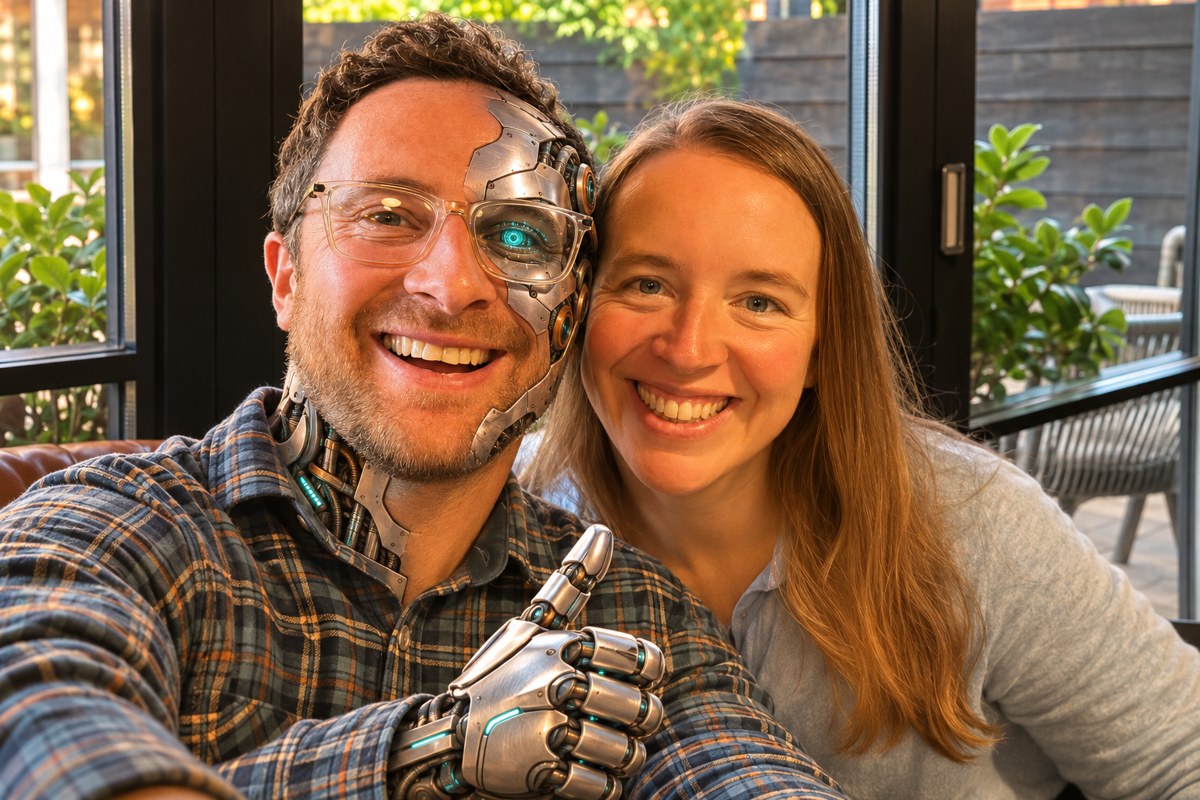
I rarely leave the house without my iPhone. It holds my photographs, remembers appointments, finds messages and helps me speak to people on the other side of the world. It helps Ben function.
You could argue I’m already a cyborg, although apparently even a cyborg can forget why he walked into the kitchen.
We have become used to extending our abilities through technology. AI takes that further, into our creativity, judgement, knowledge and capacity to help others.
I think that is why this feels so uncomfortable. When it starts doing something I thought made me special, I can find myself questioning much more than the future of my work.
I begin to wonder whether I still matter.
When being useful becomes who we are
In our work with couples at DGL, we often explore the identities people bring into a relationship.
Sometimes I need to feel like I’m the capable one, that I am the provider and can provide, that I am the person who helps others or the one who has to know what to do.
There is nothing wrong with wanting to contribute. These roles can give us purpose and belonging. But I can become so attached to being that person that I struggle to imagine who I would be without the role.
If I’m the provider, what happens when I cannot provide? If I’m the knowledgeable one, what happens when my partner gets a more useful answer from their phone?
I might be worried about losing income, but I might also be frightened that I will no longer feel needed, respected or capable. Those concerns can become tangled together.
It helps to pause and ask what is hurting. What am I afraid I will lose, and what would losing it mean about me?
I would never look at one of my children and calculate their value according to how useful they had been that afternoon. Yet I can be remarkably willing to do that to myself.
Perhaps you can too.
We don’t have to pretend this is easy
If someone is worried about paying their mortgage, they need practical help and someone willing to listen. “Look on the bright side” is fairly useless advice when you’re wondering how to feed your family.
Some changes will involve real loss. We need room to acknowledge that and have sensible conversations about work, skills and support.
But fear can also carry us a long way beyond what we know.
I can go from “I don’t know what my work will look like” to “There will be no place for me” without noticing the enormous leap I have just made.
I don’t know that there will be no place for me.
I may need to change what I do, ask for help or develop abilities I have never had much reason to use. That could be difficult, especially if I am already tired or frightened.
But I don’t have to decide, in advance, that my best days are behind me. I can leave a little room for a future I haven’t yet been able to imagine.
Seven minutes with my children
A few days ago, I gave ChatGPT a task and left it working. For seven minutes, I didn’t need to touch it or look at it, so I played a board game with my children.
What it produced would potentially have taken me six or seven hours.
I have thought about those seven minutes since. While I was playing, I wasn’t particularly concerned with my professional identity. I was enjoying being their dad.
There are parts of my life that I say matter enormously to me, but which so often receive whatever attention I have left after everything else has been done. That afternoon, I had some help with the work and could give my attention to the people I was doing all this work for.
That won’t be the outcome of every task or every change. But it showed me something I want more of.
I don’t want every hour AI saves me to become an opportunity to cram in more work. I want some of that time to become a walk in the forest, a longer conversation with Kerry or an afternoon with the children when my mind isn’t halfway back at my desk.
We spend a lot of time asking what AI will make possible at work. I think it is worth asking what we would like that help to make possible in the rest of our lives.
What might I be holding on to?
I can love my work and still be more than my work. I can learn something new without treating everything I learnt before as wasted years.
And goodness, we can be stubborn when life asks us to change. I certainly can. We fight and fight to keep things as they are, sometimes discovering later that the change we resisted opened up something we now wouldn’t want to lose.
That doesn’t mean every change is for our greatest good. But it leaves room for the possibility that we cannot yet see everything it might offer.
Perhaps I don’t need to hold quite so tightly to the version of myself I already understand.
I find that an uncomfortable thought, but also a hopeful one. It means there may be more to discover about who I am and how I can contribute. The years I have already lived can come with me, even if the role changes.
What CAN I do now?
When I find myself projecting into a catastrophe, I try to return to this question:
What CAN I do now, and what CAN I take ownership of?
Sometimes that means making a practical plan or admitting I have been putting something off. Sometimes the first thing I can take responsibility for is how I behave towards the people around me while I am frightened.
I can share my concerns without presenting my worst fears as facts. I can ask for help without having to know the answer first. I can spend a little time learning, rather than asking myself to work out the next ten years before tea.
You don’t have to solve the whole future today.
When I say, “It’ll be OK,” I’m expressing hope that we can meet change, support one another and build lives we still want to live. I cannot promise what those lives will look like, but I don’t think uncertainty requires us to give up on them.
For now, there are people we can turn towards, questions we can ask and decisions we can begin to make.
And somewhere in the middle of all this extraordinary technology, there may be a very ordinary afternoon with your children that you would otherwise have missed.
That feels like something worth looking forward to.
So I’ll leave you with three questions:
- What IS within your control today? Where could you take one useful step, even if you cannot settle the bigger question yet?
- What HAVE you been putting off? Is there something you need to learn, explore or ask for help with that burying your head in the sand won’t resolve?
- What conversation could you have with your family? Could you share your concerns without fearmongering and invite them to help make a plan?
That last one does involve working as a team and giving other people a say. A small adjustment for those of us who occasionally confuse being responsible for everyone with being in charge of everyone. Myself included.
Love and best wishes,
Ben and Kerry
P.S. A little honesty about the writing
I wrote the first draft of this article and used ChatGPT to help develop and organise the ideas, edit the wording and make it easier to read. The personal experiences and views are mine.
This has also been a wonderful gift to my marriage. Kerry is a wonderful writer, and I would always ask her to review my writing. Several times she handed it back in disgust, asking, “Have you even read your own writing?!”
She was right every time. I hadn’t.
ChatGPT never asks me that. It just happily cracks on and helps turn my first draft into something digestible, which means Kerry finally gets something she can enjoy reading without having to repair it first.
So, having spent an entire article discussing whether AI might steal my identity, I should probably acknowledge that it might also have saved my marriage. LOL.
Ben